
"Don't bother with churches, government buildings or city squares; if you want to know about a culture, spend a night in its bars."
Ernest Hemingway
American novelist, The Old Man and the Sea, Nobel Prize 1954

Papa Doble (Hemingway Daiquiri)
- 2 oz white rum
- ¼ oz maraschino liqueur
- ¾ oz grapefruit juice
- ½ oz lime juice
- ¼ oz simple syrup
- Garnish: lime wedge
Risk exposure: 2 units of alcohol
Recipes for Participation
Tracker certificates, airbag, twin-win, outperformance, bonus and outperformance bonus certificates — the Hemingway products of the structured product world.
Hemingway travelled extensively throughout his life but was most at home on a barstool. The premise behind Philip Greene's book To Have and Have Another is that Hemingway liked to write about what he was drinking — the daiquiri at Floridita in Havana appears in Islands in the Stream, the gin & tonic at the Museo Chicote in Madrid appears in The Denunciation, and his favourite Harry's Bar in Venice appears in Across the River and into the Trees.
Investors in participation products are similar to Hemingway — eager to engage directly with a market. The simplest product is the tracker certificate, which gives investors direct exposure to the indexes tracked in the IndexesIQ stock market guide. But the bartenders of the structured product world have created various modifications that add non-linear elements to the strictly linear payoff.
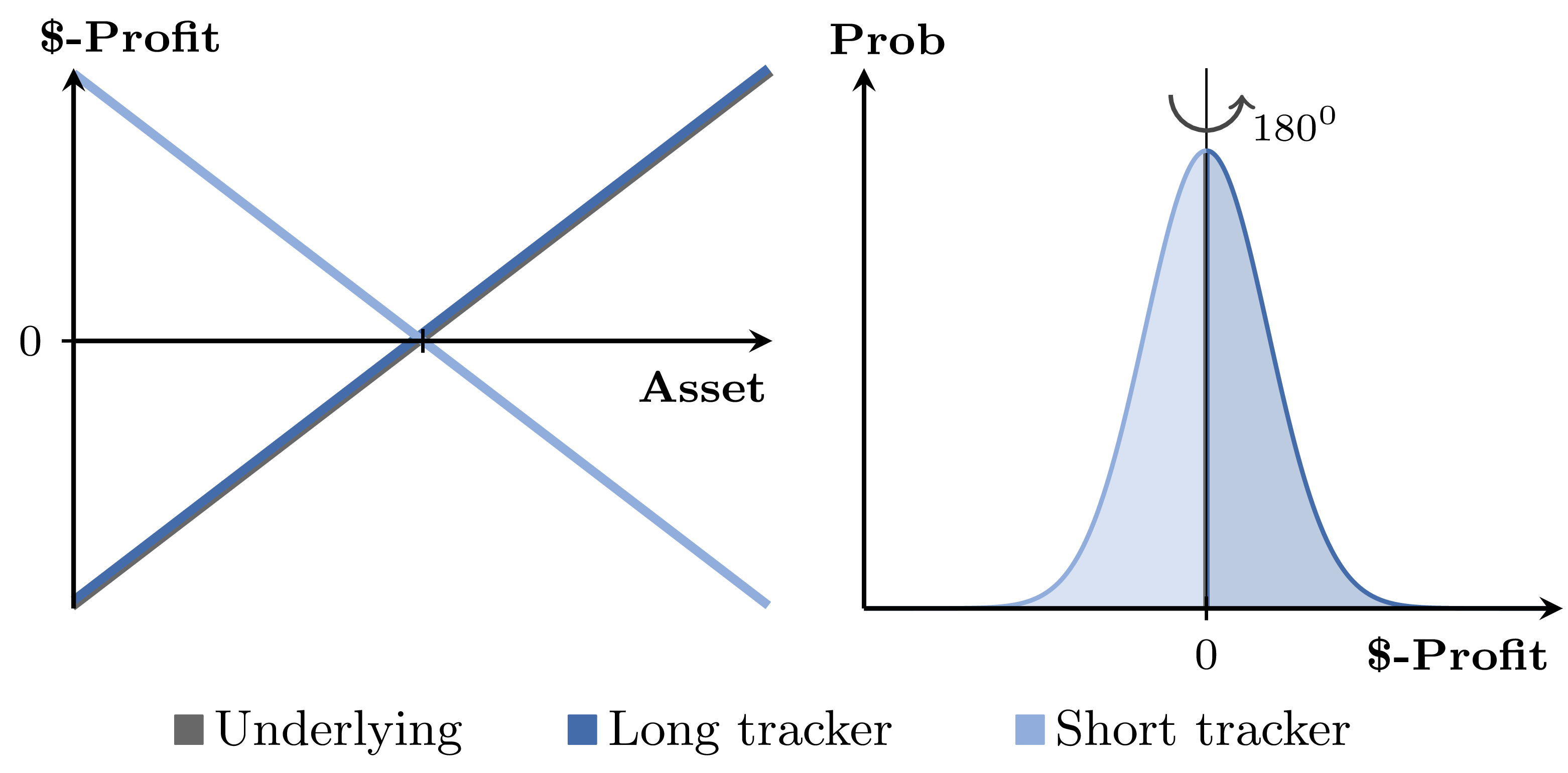
The basic idea of a long tracker is to capture the return of the underlying asset 1:1. The short tracker offers the inverted return. Trackers don't contain options and are typically open-ended (no fixed maturity). Long trackers are low-fee and suited for long-term strategies; short trackers enable tactical short positions that most private investors couldn't otherwise achieve. The SSPA Swiss Derivative Map classifies trackers as the foundational participation product.
Payoff during investment period
Long tracker — replicating portfolio
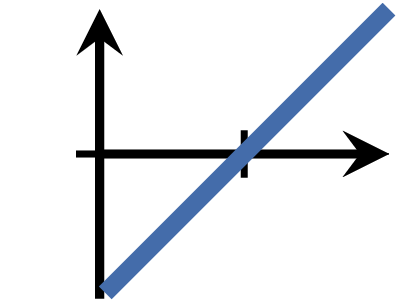
Buy the underlying asset.
 Long
LongTracker
 Asset
AssetShort tracker — replicating portfolio
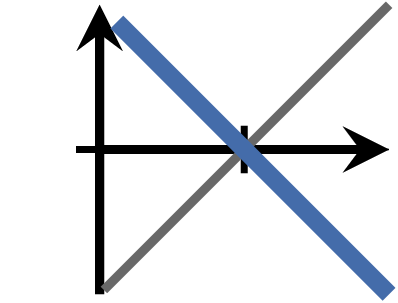
Short sell the asset and invest the proceeds plus the product's investment amount into the money market.
 Short
ShortTracker
ShortAsset
 Money
MoneyMarket
Borrow fees and interest yield accrue over time.
Risk matrix
| Return | Long tracker | Short tracker |
|---|---|---|
| Profit | Asset↑ | Asset↓ |
| Loss | Asset↓ | Asset↑ |
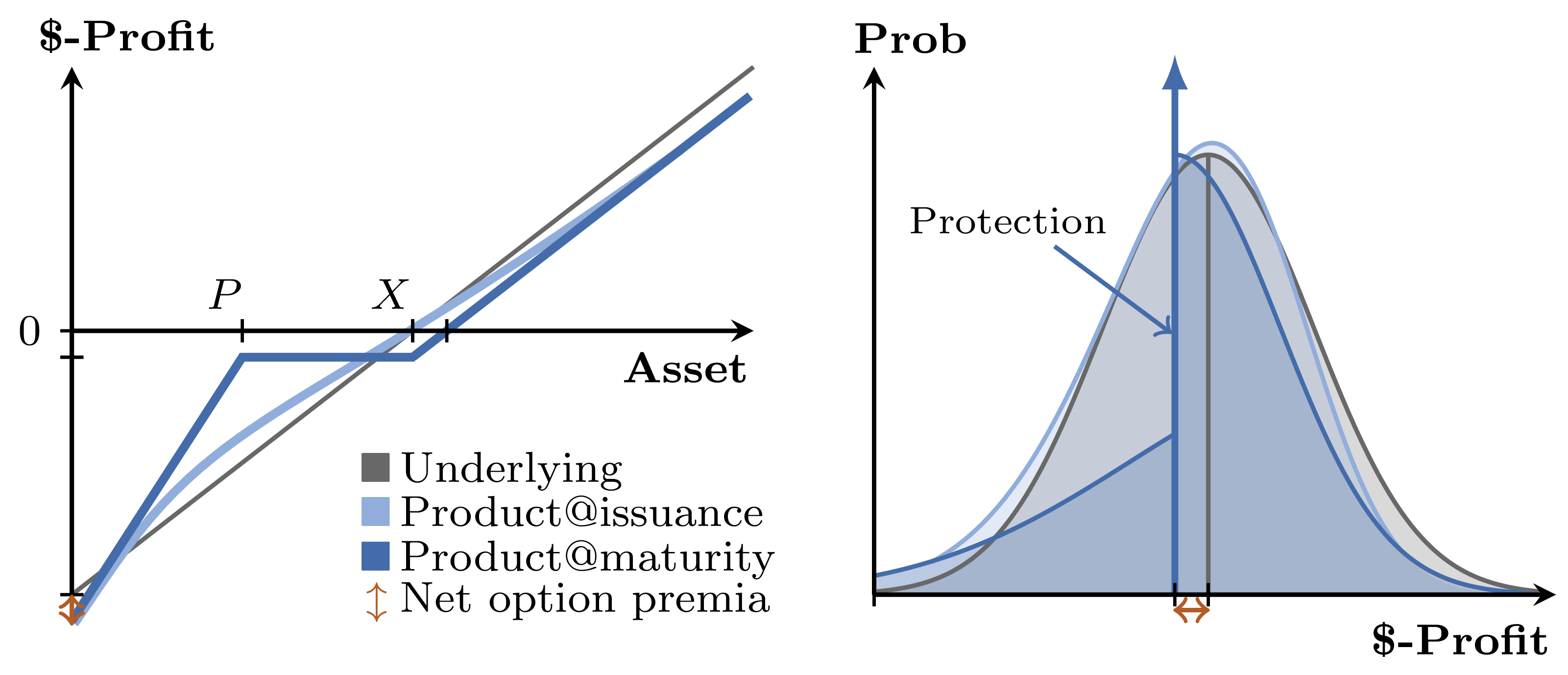
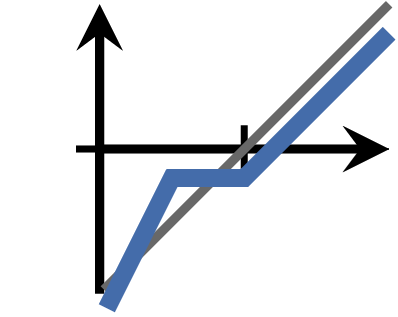
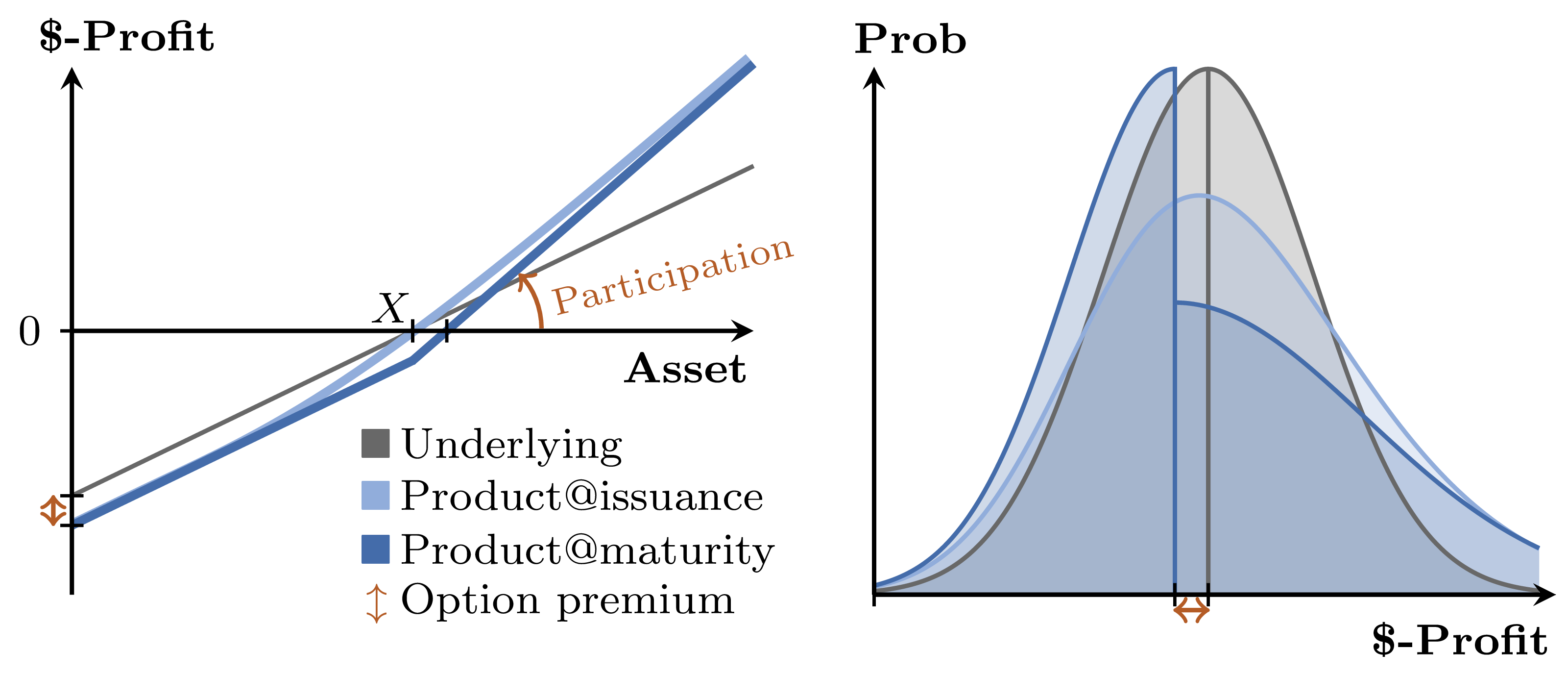
The airbag certificate takes the tracker and adds an "airbag" below the current asset price (= the strike). If the asset ends above the protection level P at maturity, the negative return is absorbed by the airbag. Below P, losses occur at an accelerated rate of X/P. The product always pays at or above the underlying asset — but the No Free Lunch Rule applies: the airbag certificate costs more than the asset itself, reducing the profit at maturity by the net option premium.
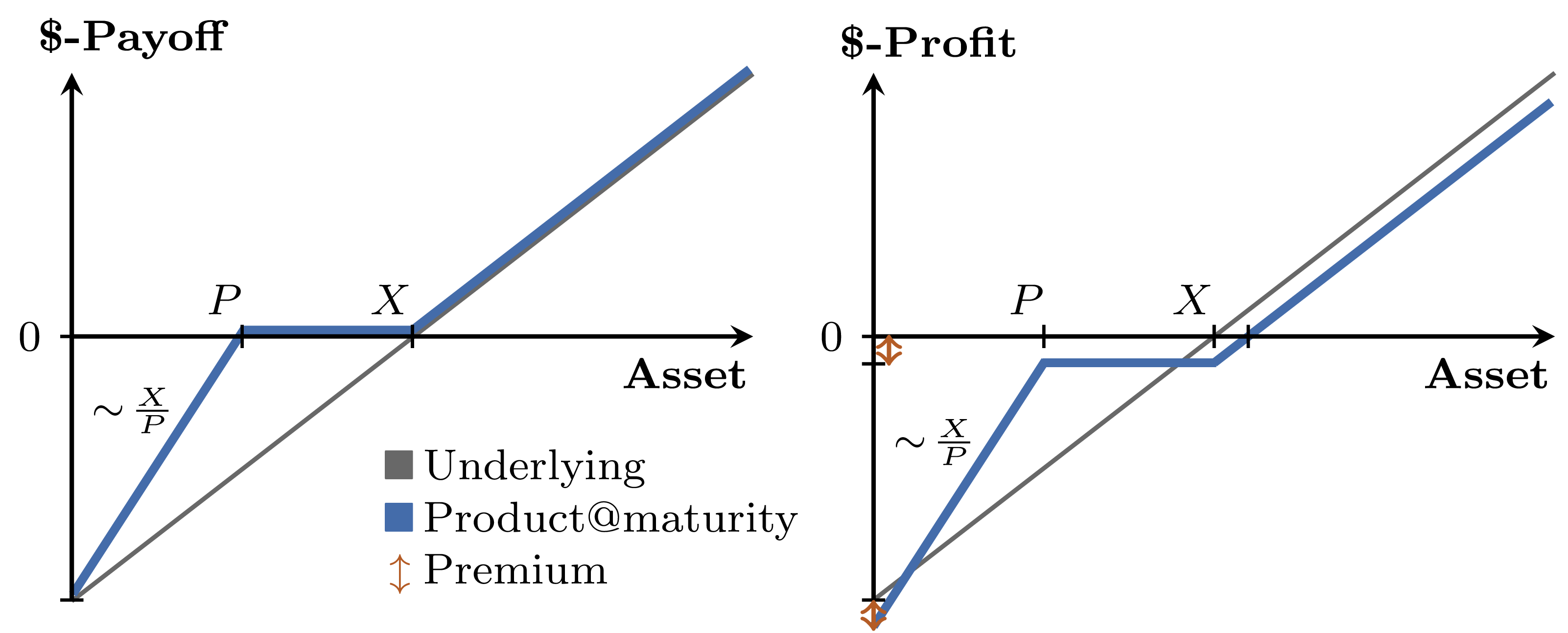
Payoff (left) and profit (right) of an airbag certificate. The arrows illustrate the net option premium — the advantage over a direct asset investment must be paid for at issuance.
Payoff at issuance and maturity
Product parameters
| Strike X | At the money at issuance |
| Protection P | Below the strike |
Replicating portfolio
At issuance, buy the asset and an at-the-money put and short sell X/P puts at strike P.
 AirbagAsset
 Put @ X
 Short
ShortPut @ P
Product price at issuance exceeds the asset price by the net option premium.
Risk matrix
| Return | During lifetime | At maturity |
|---|---|---|
| Outperformance | Rates↓, Vol↑ | Asset↓ & above P |
| Forgone premium | Asset↑ | |
| Loss | Rates↑, Vol↓ | Asset↓ below P |
Airbag Call @ XShort
Put @ P
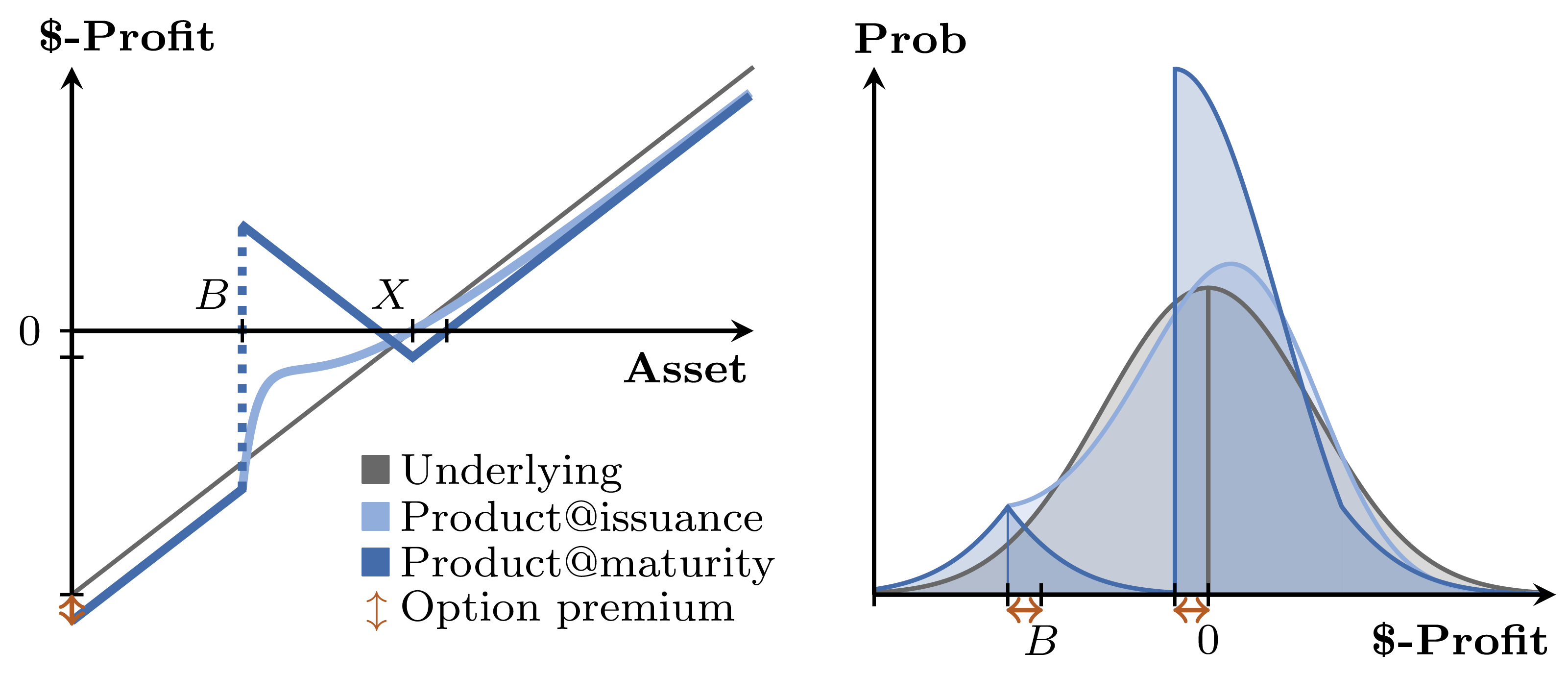
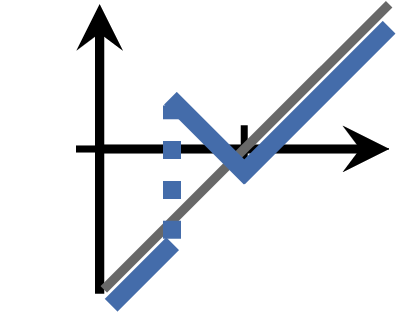
The twin-win certificate enhances the airbag concept: instead of absorbing downside losses, it converts them into gains. The product doubles the at-the-money put investment and removes the short option — but uses a down-and-out put instead of a standard put to reduce the cost. The result: the product profits from both rising and falling asset prices, as long as the barrier B is not touched.
Once the barrier is touched, the put option knocks out and the twin-win converts into a standard tracker — with the disadvantage that the investor paid a premium at issuance. The twin-win suits investors who expect large price swings but are unsure of direction — for instance, after a market crash when a rebound is possible but further downside cannot be ruled out.
Payoff at issuance and maturity
Product parameters
| Strike X | At the money at issuance |
| Barrier B | Below the strike |
Replicating portfolio
At issuance, buy the asset and two at-the-money down-and-out puts.
 Twin-WinAsset
 Down-and-out
Put
Product price at issuance exceeds the asset price by the net option premium.
Risk matrix
| Return | During lifetime | At maturity |
|---|---|---|
| Outperformance | Rates↓, Vol↑ | Asset↓ & above B |
| Forgone premium | Asset↑ | |
| Loss | Rates↑, Vol↓ | Asset↓ below B |
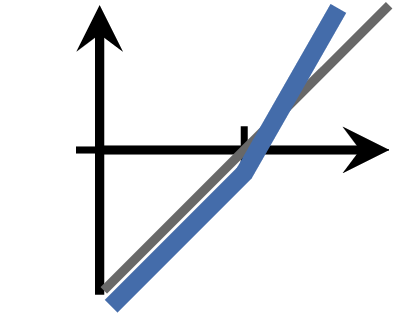
The outperformance certificate adds a non-linear element above the strike: an enhanced upside participation P > 1. The product buys (P−1) units of an at-the-money call on top of the underlying asset. The total investment exceeds the asset price by the option premium paid.
Below the strike, the profit distribution mirrors the underlying — shifted left by the premium paid. Above the strike, the distribution is stretched horizontally by factor P. During its lifetime the product profits from rising rates and rising volatility due to the long call component.
Payoff at issuance and maturity
Product parameters
| Strike X | At the money at issuance |
| Participation P | Upside participation above the strike (P > 1) |
Replicating portfolio
At issuance, buy the asset and (P−1) × at-the-money call.
 Outperformance
Certificate
AssetLong CallProduct price exceeds asset price by the option premium.
Risk matrix
| Return | During lifetime | At maturity |
|---|---|---|
| Outperformance | Rates↑, Vol↑ | Asset↑ |
| Forgone premium | Asset≈ or Asset↓ | |
| Loss | Rates↓, Vol↓ | Asset↓ |
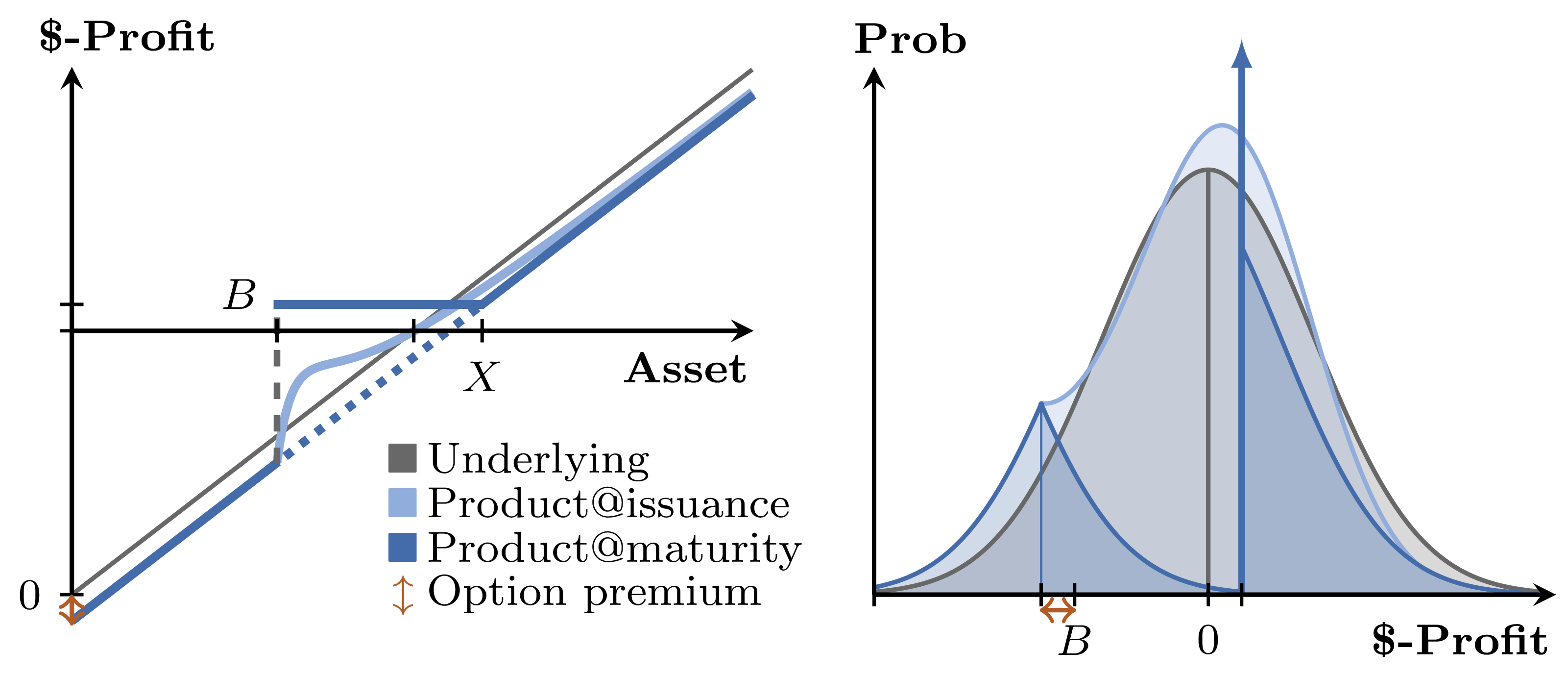
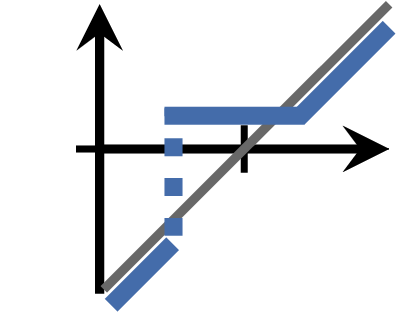
The bonus certificate adds a non-linear element at a bonus level above the current asset price. A zero-bond investment grows to this bonus level at maturity. The non-linear feature consists of a short down-and-in put (providing the bonus protection) and a long call at the bonus level (providing upside participation). As long as the barrier is not touched, investors receive at least the bonus level at maturity.
Payoff at issuance and maturity
Product parameters
| Strike X | Above the asset price at issuance (= bonus level) |
| Barrier B | Below the asset price at issuance |
Replicating portfolio
At issuance, invest the asset value into a zero-bond (face value = strike) and buy a call and short a down-and-in put.
 Bonus
BonusCertificate
Long Call Short
ShortD&I Put
Product price exceeds asset price by the net option premium.
Risk matrix
| Return | During lifetime | At maturity |
|---|---|---|
| Outperformance | Rates↑, Vol↑ | Asset↑ |
| Forgone premium | Asset↓ | |
| Loss | Rates↓, Vol↓ | Asset↓ |
BonusCertificate
AssetDown-and-outPut
This recipe always settles physically above the strike. The zero-bond recipe can use cash or physical settlement (bond-option handshake).
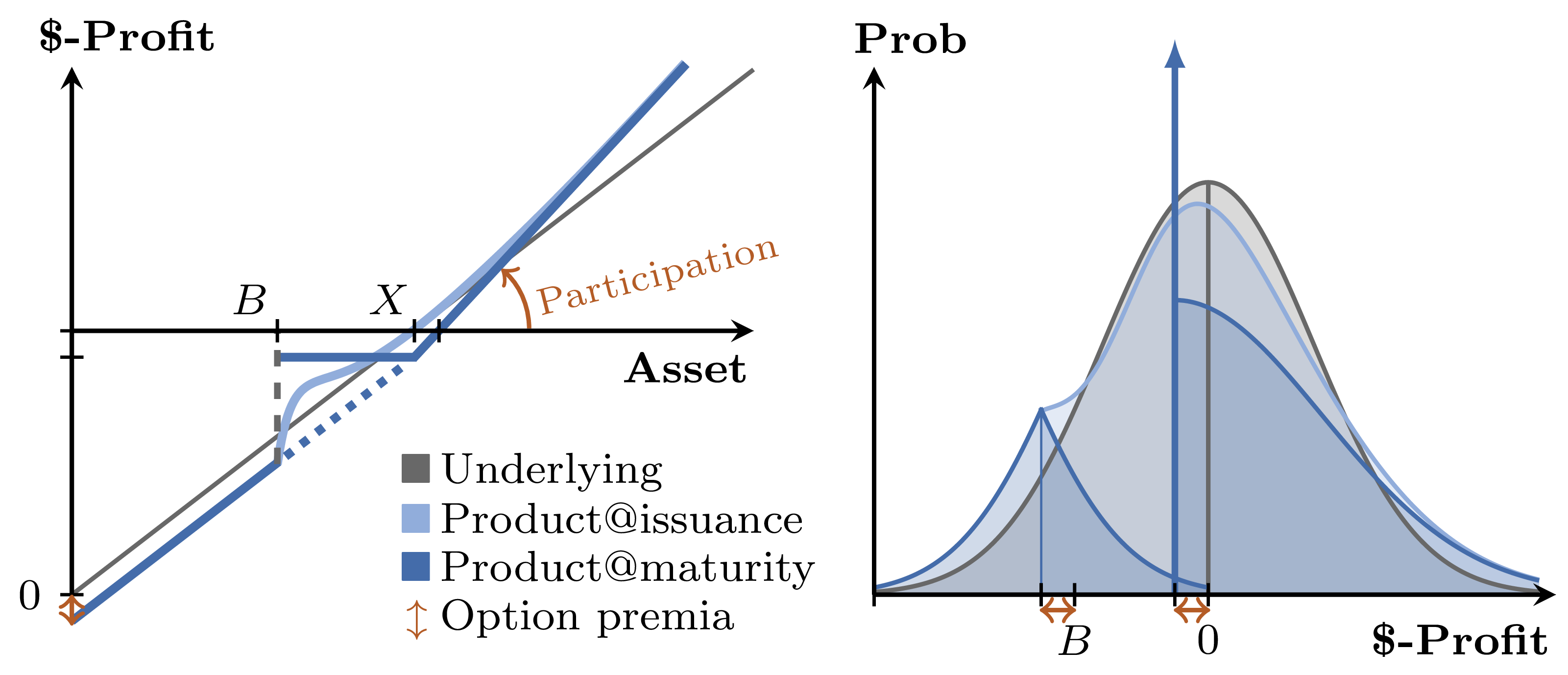
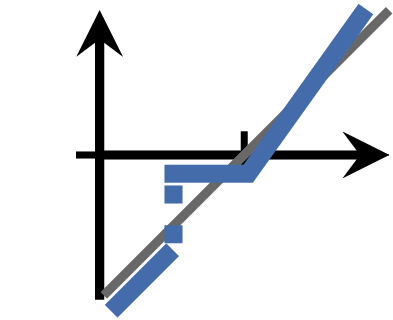
The outperformance bonus certificate is a hybrid of the outperformance certificate and the bonus certificate — it combines a bonus level with an upside participation P > 1. Unlike the bonus certificate, it uses an at-the-money strike (not a strike above the asset price) because the interest rate effect finances the enhanced upside participation through the bond-option handshake rather than the bonus level.
Investors in the bonus certificate have a slightly more defensive view (higher bonus level, lower upside participation). Investors in the outperformance bonus certificate have a slightly more bullish view — they accept a lower bonus level in return for stronger upside participation.
Payoff at issuance and maturity
Product parameters
| Strike X | At the money at issuance |
| Barrier B | Below the asset price at issuance |
| Participation P | Upside participation above the strike (P > 1) |
Replicating portfolio
At issuance, buy P × zero-bond (face value = strike), P × call and short a down-and-in put.
 Outperformance
Bonus Cert.
Long CallShortD&I Put
Product price exceeds asset price by the net option premium.
Risk matrix
| Return | During lifetime | At maturity |
|---|---|---|
| Outperformance | Rates↑, Vol↑ | Asset↑ |
| Forgone premium | Asset↓ | |
| Loss | Rates↓, Vol↓ | Asset↓ |
OutperformanceBonus Cert.
AssetLong PutDown-and-outPut
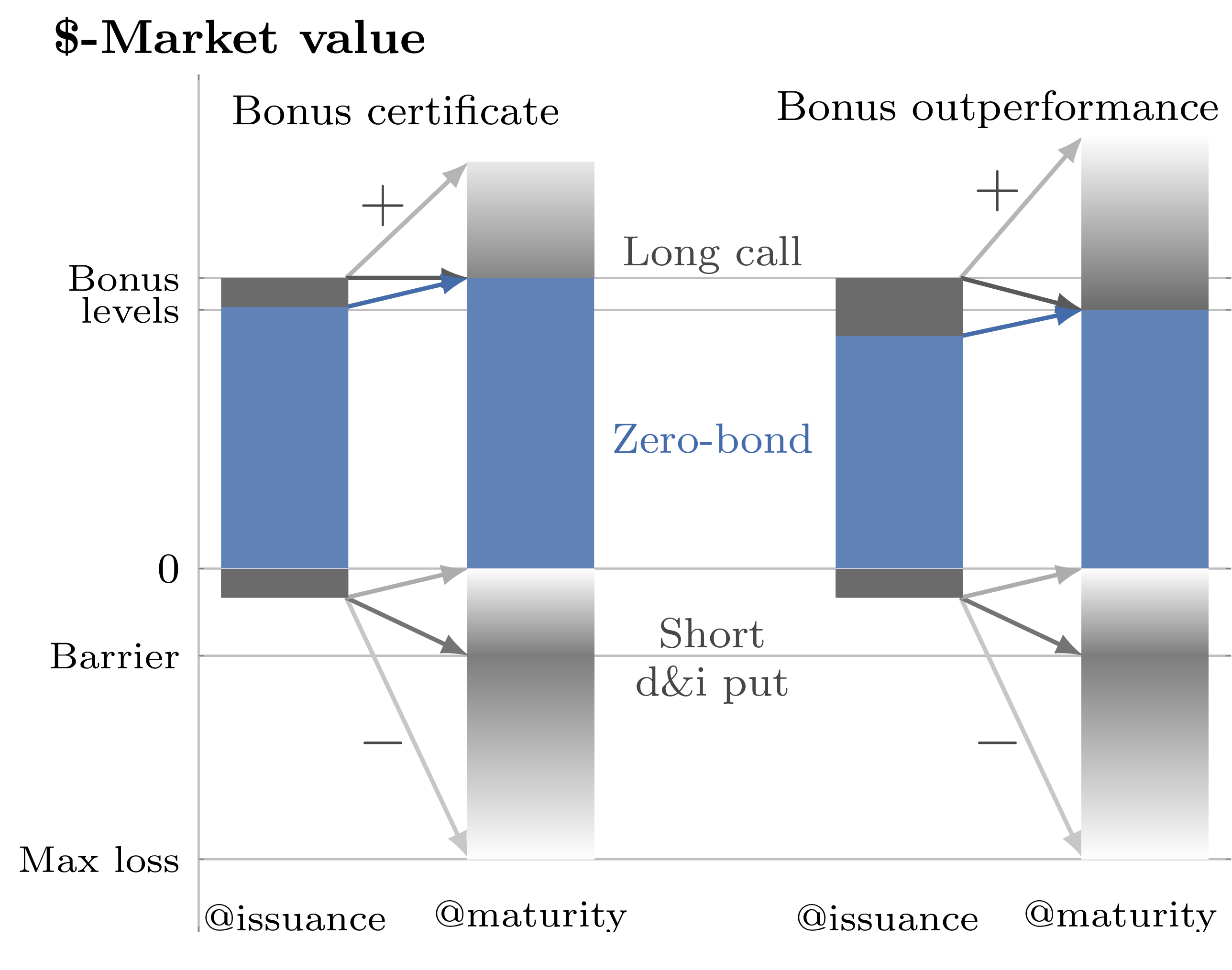
Bonus Certificate (left) versus Outperformance Bonus Certificate (right). The bonus certificate uses a higher strike (bonus level) but lower upside participation — a larger zero-bond investment and smaller call position. Both use an identical short down-and-in put. The outperformance bonus certificate suits a slightly more bullish tactical view.
- Long tracker — purely linear payoff, typically open-ended, low-fee, suited for long-term strategic allocation; efficient access to baskets and indexes
- Short tracker — enables short positions; unique for private investors who otherwise cannot short the market
- Airbag — absorbs moderate downside losses up to protection level P, accelerated losses below P; suited for investors who want loss protection up to a defined floor
- Twin-win — profits from both up and down moves as long as barrier is not touched; suited for volatile markets with uncertain direction
- Outperformance — enhanced upside participation P > 1 above the strike; suited for bullish investors willing to pay a premium for leveraged upside
- Bonus — pays at least the bonus level at maturity if barrier is not touched; suited for moderate downside protection with full upside
- Outperformance bonus — hybrid combining bonus protection with enhanced upside; more bullish than the bonus certificate
- Most non-linear participation products cost more than the underlying asset — always compare the product price to the asset price before investing
Tourists in Havana often hear that Hemingway's favourite drink was the mojito, which he allegedly drank at La Bodeguita del Medio. Yet Hemingway never wrote about mojitos. He did enjoy a similar drink, especially when spending time on his beloved boat, Pilar. The boat's skipper, Gregorio Fuentes, created the Gregorio's Rx cocktail for Hemingway when he was under the weather. Many believe that Fuentes and fellow skipper Carlos Gutierrez were the basis for the old fisherman Santiago in The Old Man and the Sea.
Gregorio's Rx Cocktail
- 1½ oz Papa's Pilar Blonde Rum
- 1 oz honey syrup
- 1 oz lime juice
- Garnish: 4 mint leaves
Risk exposure: 2 units of alcohol
While notoriously fond of drinking, Hemingway knew his limits — he refrained from drinking while writing. Asked in an interview if rumours of him taking a pitcher of martinis to work every morning were true, he answered:
"Have you ever heard of anyone who drank while he worked? You're thinking of Faulkner. He does sometimes — and I can tell right in the middle of a page when he's had his first one. Besides, who in hell would mix more than one martini at a time, anyway?"
Ernest Hemingway
American novelist, The Old Man and the Sea, Nobel Prize 1954
For educational purposes only. Not investment advice. Derivative products carry significant risks and may not be suitable for all investors.